Seven Seas
This series explores the intersection of minimalism, geometry, and the inherent unpredictability of watercolor. Each work is an investigation into surface - where pigment, water, and paper interact to reveal subtle gradients, organic textures, and the quiet order of horizontal and vertical divisions.
Guided by principles of balance of the Golden Ratio, these compositions distill visual experience to its essentials. The washes of color evoke natural phenomena - sky, land, atmosphere - while remaining resolutely abstract. Edges blur and forms dissolve, inviting contemplation of impermanence and transformation.
In this series, the act of painting becomes a search for harmony within constraint. The transparency of watercolor allows for both control and accident, echoing the tension between structure and spontaneity. Each piece is a meditation on the beauty found in simplicity, the resonance of surface, and the silent dialogue between material and idea.
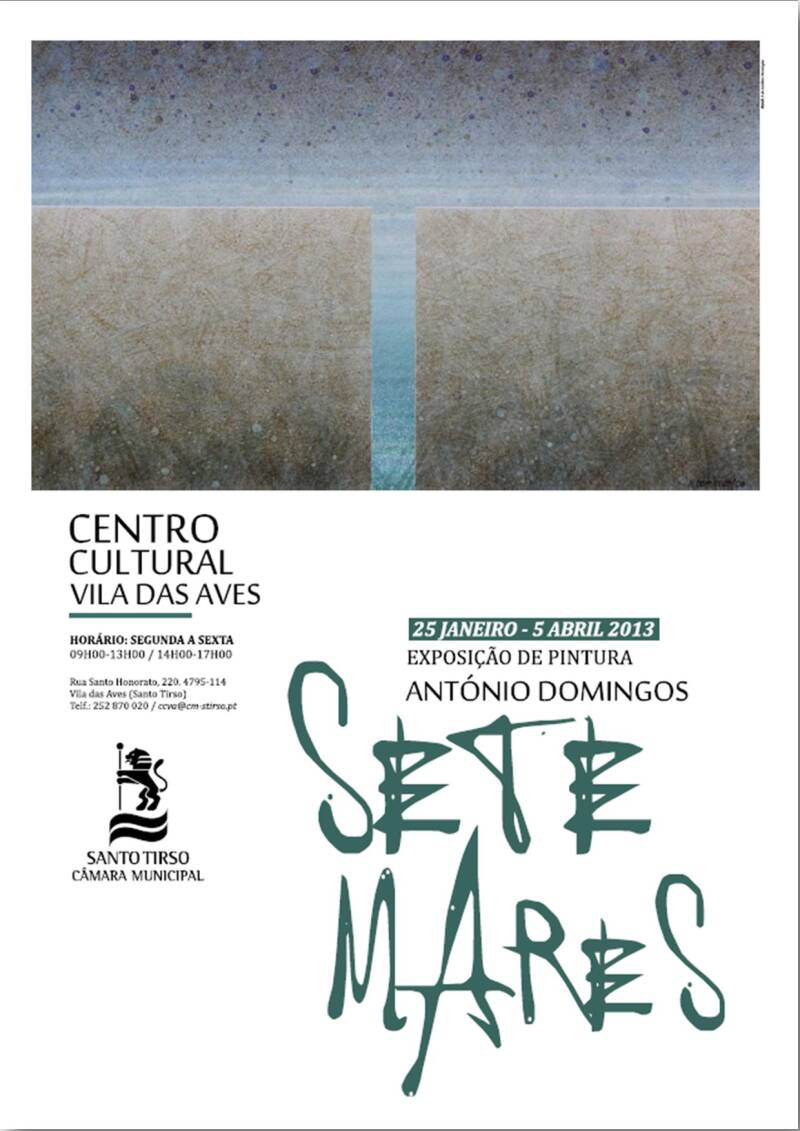
On the edge of the seas
the most beautiful trails of light.
The stars.
Above all, the stars.
They glide, aglow, with a life of their own.
Across endless roads.
Whilst they await for the dawn …
Eugénia Soares Lopes


"The expression ‘the seven seas’ appears in texts from a wide variety of civilisations, notably in Sumerian writings dating back to 2300 BC…
The ‘seas’ to which it refers have varied over the centuries and inevitably differed according to the geographical location of those who used the expression. The 9th-century text by Ya’qubi is interesting in that it provides a description of each of the “seas” it lists:
“Anyone wishing to reach China must cross seven seas, each with its own colour and winds, fish and breezes, completely distinct from the one that follows it. The first of these is the Sea of Fars, which is sailed from Siraf. It extends as far as Ra’s al-Jumha; it is a strait where men fish for pearls." (...)